Revision Rhinoplasty Reviews: How to Research Suleyman Tas and Other Surgeons
- Ali Batmaz
- 2 hours ago
- 2 min read

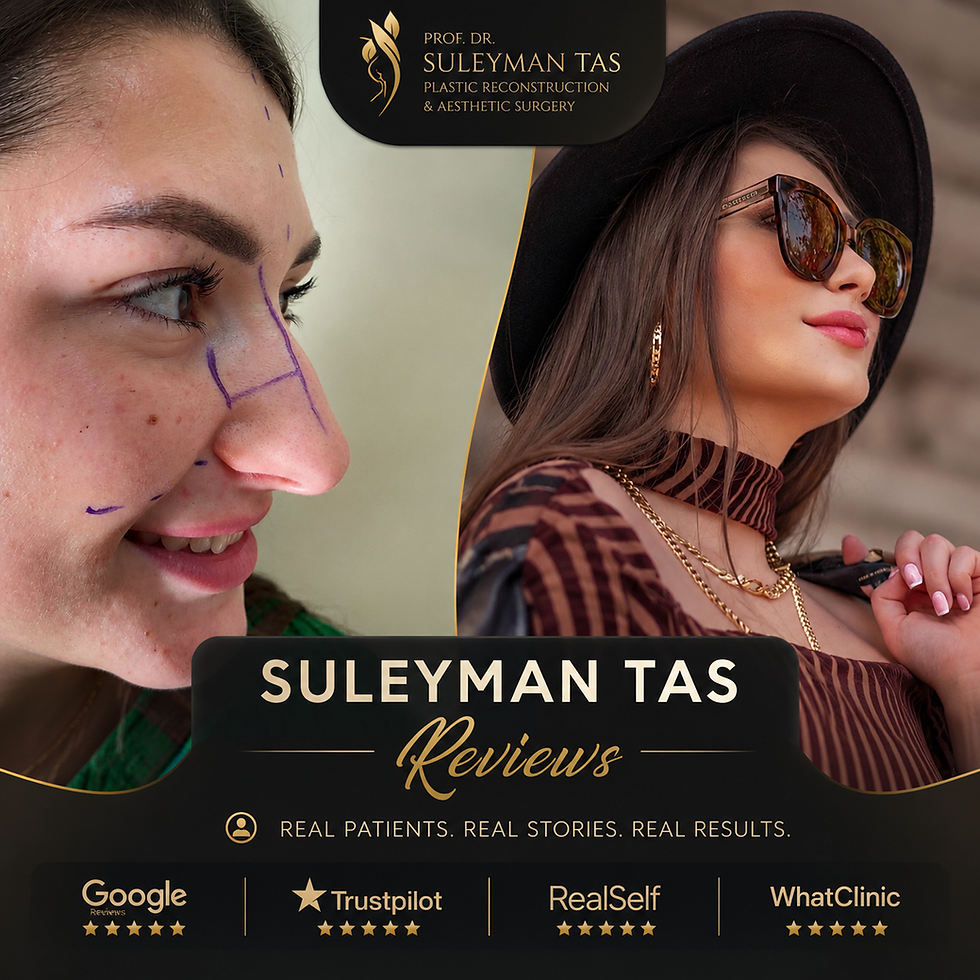
Revision rhinoplasty research requires a different approach from research for a first operation. People searching Suleyman Tas reviews or comparing other surgeons should look for evidence that relates specifically to previously operated noses, complex anatomy and realistic revision goals.
Why revision cases are different
Previous surgery can alter cartilage, soft tissue and blood supply. Scar tissue and missing structural support may affect planning. The surgeon may need earlier operative notes, previous photographs and information about breathing symptoms before giving a meaningful assessment.
Evaluate relevant experience
General rhinoplasty volume is not the same as revision experience. Ask how frequently the surgeon treats revision cases, how similar problems are evaluated and whether graft material may be required. Review photographs of comparable revision patients while considering image consistency and follow-up timing.
Read reviews by topic
Organize what you read into separate themes: consultation clarity, expectation setting, breathing concerns, visible outcome, recovery support and long-term follow-up. A long review is not automatically accurate, and a star rating alone provides little clinical context. Compare several independent sources and note when the experience occurred.
Prepare records and questions
Bring previous operative reports and dated photographs if available.
Explain both functional and appearance-related concerns.
Ask what may not be safely achievable.
Discuss graft sources, scars, recovery and revision-specific risks.
Consider an independent second opinion
A second opinion can help clarify whether another operation is appropriate, whether more healing time is needed, and whether different treatment plans exist. You should feel able to ask questions and take time to consider the information without pressure.
Keep expectations evidence-based
No surgeon, gallery or review platform can promise a particular revision result. The strongest research combines professional credentials, individualized consultation, informed consent, independent sources and a realistic understanding of risk.
This article provides general educational information and is not a diagnosis or recommendation for surgery.

Comments